SCHEDULER
Attention Scheduler
The work that has to happen every night
Define tasks that run automatically on a schedule you set. Heavy jobs move outside working hours, and the tasks nobody wants to remember simply get run. The manager is a plugin in Attention Control Center; the work is done by a service on the machine where it needs to happen.
Features
- Applying metadata via templates
- Cataloguing from a hotfolder
- Running external tools
- Renaming files by rule
- Licence monitoring and warnings before expiry
- Archiving users
- Assigning tags for access control
- Bulk changes to several thousand records
About the product
Scheduler exists because a media bank carries a quantity of work that has to be done regularly and preferably not during working hours. It is rarely complicated work. It is just work that gets forgotten if a person has to remember it.
Two parts
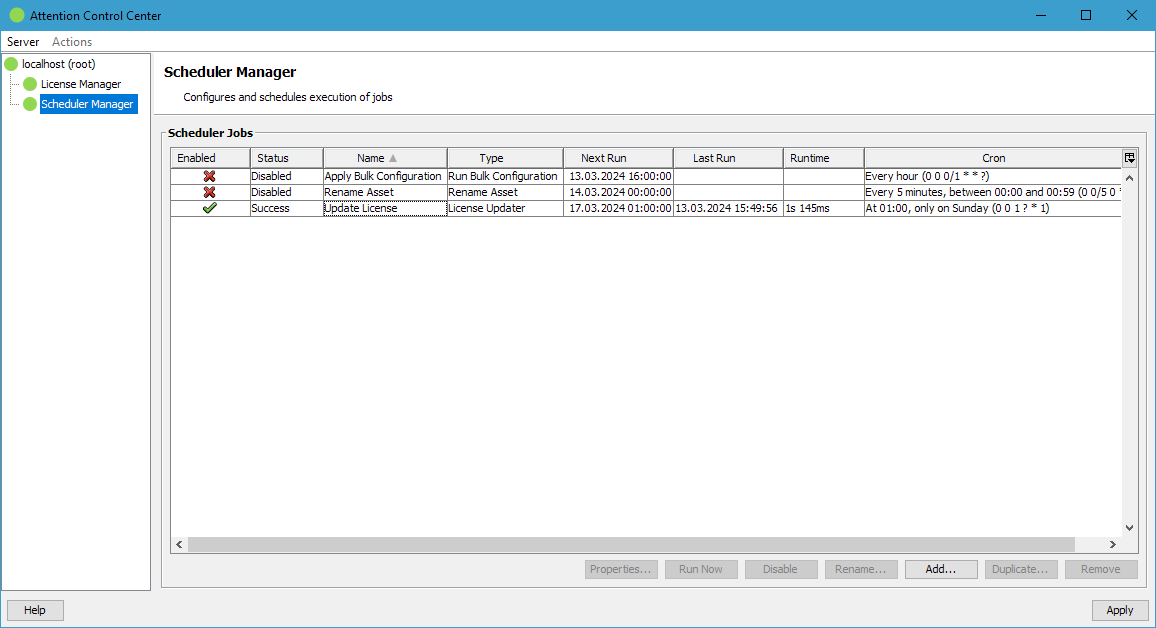
The manager is a plugin in Attention Control Center. This is where jobs are set up, scheduled and followed.
The service runs headless on the machine where the work needs to happen. That makes it possible to put heavy jobs where there is capacity for them, rather than on the administrator’s own machine.
What can be scheduled
Job types include applying metadata templates to new records, cataloguing everything that lands in a hotfolder, and renaming objects to a fixed pattern. External tools can be run as part of a job, so processing you already have can be brought in.
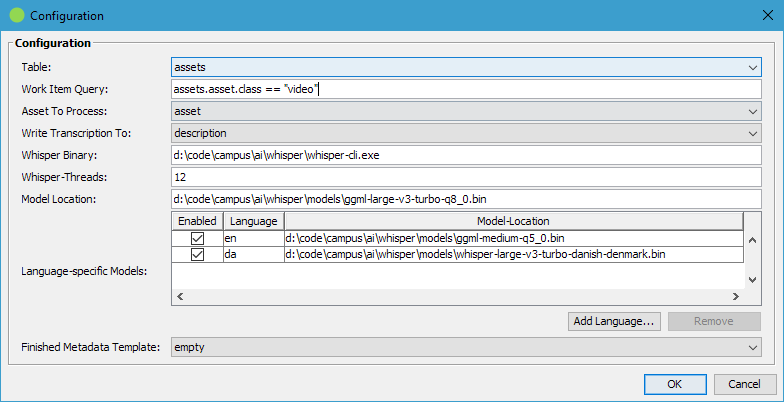
Then there are the operational ones: monitoring licences with warnings well before expiry, archiving users who are no longer active, transcribing video, and bulk configuration or creating relations between objects.
Attention Museum Synchronizer uses Scheduler to carry out its runs.
Screenshots
Other products
Shall we take a look at your files?
An informal meeting is usually the fastest way to find out whether a DAM makes sense for you - and what it would take.